Probiotics 101: Why We Need Them Today More Than Ever
In our first post, we covered what probiotics are, how they work, and how to read a label. This time, we're answering the bigger question: why does any of this matter right now?
The short answer is that our gut is under more pressure than ever. Over the last few decades, doctors have watched a long list of gut-related problems climb, and researchers keep pointing back to the same place: the way we eat and live today.
Let's look at the facts. To be clear up front, no probiotic, including ours, treats or prevents any of the conditions below. But understanding what's happening is the first step to taking better care of your gut.
The Numbers Are Heading the Wrong Way
Colitis and Crohn's Disease
Ulcerative colitis and Crohn's disease, together called inflammatory bowel disease (IBD), were once rare. During the second half of the 1900s, rates climbed sharply across North America, Europe, and Australia (Ng et al., 2017). Rates in those countries have since leveled off at a high level, but now they're rising fast in countries that are adopting a Western way of life.
Japan is a striking example. New cases of ulcerative colitis went from about 0.08 per 100,000 people in 1965 to 4.8 per 100,000 in 2000, rising right alongside the shift to a more Western diet (Chiba et al., 2021).
Colorectal Cancer in Younger Adults
Colorectal cancer is dropping in older adults, thanks largely to screening. But in adults ages 20 to 49, it's rising about 3% every year (American Cancer Society, 2026). Researchers estimate that someone born in 1990 is about twice as likely to develop colon cancer, and four times as likely to develop rectal cancer, as someone born in 1950 (ASCO Post, 2026).
Nobody knows the exact cause yet. Obesity, antibiotics, and Western-style diets are among the leading suspects researchers are studying (The Lancet Gastroenterology & Hepatology, 2026).
Food Allergies
According to the CDC, food allergies in U.S. kids rose from 3.4% in the late 1990s to 5.1% by 2011, an increase of about 50% in just over a decade (CDC, 2013). Just eight foods cause about 90% of childhood food allergies: peanuts, tree nuts, milk, eggs, wheat, soy, fish, and shellfish (Turke, 2017). Some of that rise may come from better reporting, but researchers agree the increase is real.
Celiac Disease
Celiac disease, an immune reaction to gluten in wheat, barley, and rye, is being diagnosed more and more. Across decades of studies, new diagnoses have grown by about 7.5% per year (King et al., 2020). Better testing explains part of it, but likely not all.
Allergy or Intolerance?
Not every bad reaction to dairy, soy, wheat, or eggs is an allergy. An allergy is your immune system reacting to a food. An intolerance is your digestive system struggling to break it down, like lactose intolerance with dairy. Lactose intolerance is mostly genetic and very common around the world, so it isn't a new trend. But many people today notice more digestive discomfort with certain foods than they used to.
What About "Leaky Gut"?
You've probably heard this term. Here's the honest version: "leaky gut syndrome" isn't a recognized medical diagnosis. But the idea behind it, called increased intestinal permeability, is real and measurable. It's when the lining of your gut becomes less selective about what it lets through, and it shows up in conditions like celiac disease and IBD (Cleveland Clinic; Camilleri, 2019). Scientists are still working out whether it's a cause of disease or a result of it.
What's Behind It? The Modern Gut
These conditions are different, and each has its own causes, including genetics. But researchers keep noticing a common thread: they tend to rise as countries adopt a modern, Western way of life (Kaplan & Ng, 2017). And one of the biggest things that changes with that lifestyle is your gut microbiome.
People who live traditional lifestyles, eating mostly whole foods and spending lots of time outdoors, tend to have a much wider variety of gut bacteria than people in modern Western countries (Sonnenburg et al., 2016). Here's what's working against us:
-
Processed food and low fiber. Fiber is food for your good bacteria. The typical modern diet is high in sugar, fat, and ultra-processed foods and low in fiber, so those bacteria go hungry.
-
Fewer fermented foods. Our grandparents ate more homemade sauerkraut, pickles, and cultured dairy. Today most of what's on store shelves is pasteurized, which kills the live bacteria.
-
Antibiotics. They save lives, but they don't just kill the bad bacteria. They wipe out a lot of the good ones too. That's one reason to take them only when you truly need them.
-
Stress and poor sleep. Both can throw your gut out of balance.
-
Super-clean living. We spend most of our time indoors, away from dirt, animals, and nature, which used to expose us to all kinds of helpful microbes.
That last one has some interesting research behind it. For IBD, things like having pets as a kid, growing up on a farm, and coming from a bigger family are linked to a lower risk (Kaplan & Ng, 2017).
To be clear, these are links, not proof of cause and effect. But the pattern is hard to ignore.
None of this means modern life is bad. Quite the opposite: things like pasteurization and modern farming keep our food safe, make it last longer, and help feed far more people around the world. It just means your gut may need more support today than it did years ago.
Where Probiotics Fit (and Where They Don't)
Let's be honest about this part. A probiotic won't undo decades of modern living, and it doesn't treat or prevent any of the conditions above. Anyone who tells you otherwise is overselling.
The foundation is how you eat and live:
-
Get outside, sleep well, and manage stress.
-
Use antibiotics only when you truly need them.
-
Eat fiber. General guidelines call for about 25 to 38 grams a day, depending on age and sex, and most people fall well short. Don't worry: our next post breaks down simple, everyday ways to close that gap.
-
Eat some fermented foods. Yogurt and kefir with live cultures, refrigerated sauerkraut and kimchi, and kombucha are all good options.
-
Cut back on ultra-processed foods where you can. When you follow the first two, this one naturally scales back.
That's where a daily probiotic fits: as support alongside those habits, not a replacement for them. Your gut was designed by God to work in balance, with good bacteria doing their jobs from the very first days of life. Modern life pulls that balance off course. A daily probiotic, along with real food and plenty of fiber, helps support your gut in getting back to the way it was created to work.
Not sure how to choose one? Our Probiotics 101 post walks you through exactly what to look for on the label.
When to Talk to Your Doctor
A probiotic is never a substitute for medical care. If you notice blood in your stool, unexplained weight loss, ongoing stomach pain, or changes in your bowel habits that last more than a few weeks, see your doctor, whatever your age. And remember that colorectal cancer screening now starts at age 45 for most adults (American Cancer Society, 2026).
Probiotics are safe for most healthy people, but not for everyone. If you have a weak immune system, a serious illness, or you're pregnant, talk to your doctor before you start one (NIH Office of Dietary Supplements).
Where NSTINCT Fits
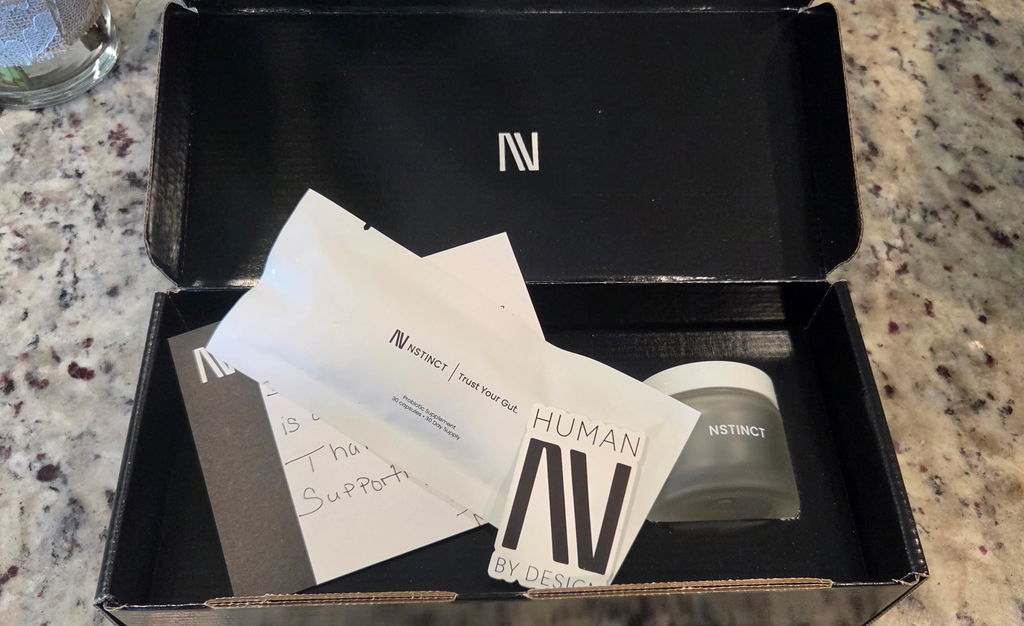
We made the NSTINCT Broad Spectrum Probiotic to be simple, honest daily support for your gut. It has 30 probiotic strains, and 40 billion AFU in every serving. It includes three prebiotic fibers, so the bacteria come packed with their own fuel, plus our MAKTabolite® postbiotic, all protected and delivered by MAKTrek®. That's more than 40 intentional ingredients and zero fillers.
Pair it with real food, plenty of fiber, and good habits, and you're giving your gut and your overall wellbeing its best shot at modern life.
Ready to start? Learn more about the Broad Spectrum Probiotic at nstinct.com.
References
-
Ng SC, Shi HY, Hamidi N, et al. Worldwide incidence and prevalence of inflammatory bowel disease in the 21st century: a systematic review of population-based studies. The Lancet. 2017;390(10114):2769-2778. ScienceDirect
-
Chiba M, Morita N, Nakamura A, Tsuji K, Harashima E. Increased incidence of inflammatory bowel disease in association with dietary transition (Westernization) in Japan. JMA Journal. 2021;4(4):347-357. doi:10.31662/jmaj.2021-0038. PMC
-
American Cancer Society. Colorectal cancer drops in older adults and rises in younger ones (Colorectal Cancer Statistics, 2026). cancer.org
-
What is causing a rise in early-onset gastrointestinal cancers, including pancreatic cancer? The ASCO Post. February 25, 2026. ascopost.com
-
Early-onset colorectal cancer: rising rates require rising awareness. The Lancet Gastroenterology & Hepatology. 2026. thelancet.com
-
Jackson KD, Howie LD, Akinbami LJ. Trends in allergic conditions among children: United States, 1997-2011. NCHS Data Brief No. 121. National Center for Health Statistics; 2013. cdc.gov
-
Turke PW. Childhood food allergies: an evolutionary mismatch hypothesis. Evolution, Medicine, and Public Health. 2017;2017(1):154-160. doi:10.1093/emph/eox014. PMC
-
King JA, Jeong J, Underwood FE, et al. Incidence of celiac disease is increasing over time: a systematic review and meta-analysis. American Journal of Gastroenterology. 2020;115(4):507-525. DOI
-
Cleveland Clinic. Leaky Gut Syndrome. clevelandclinic.org
-
Camilleri M. Leaky gut: mechanisms, measurement and clinical implications in humans. Gut. 2019;68(8):1516-1526. PMC
-
Kaplan GG, Ng SC. Understanding and preventing the global increase of inflammatory bowel disease. Gastroenterology. 2017;152(2):313-321. gastrojournal.org
-
Sonnenburg ED, Smits SA, Tikhonov M, et al. Diet-induced extinctions in the gut microbiota compound over generations. Nature. 2016;529(7585):212-215. PubMed
-
National Institutes of Health, Office of Dietary Supplements. Probiotics: Fact Sheet for Consumers. ods.od.nih.gov