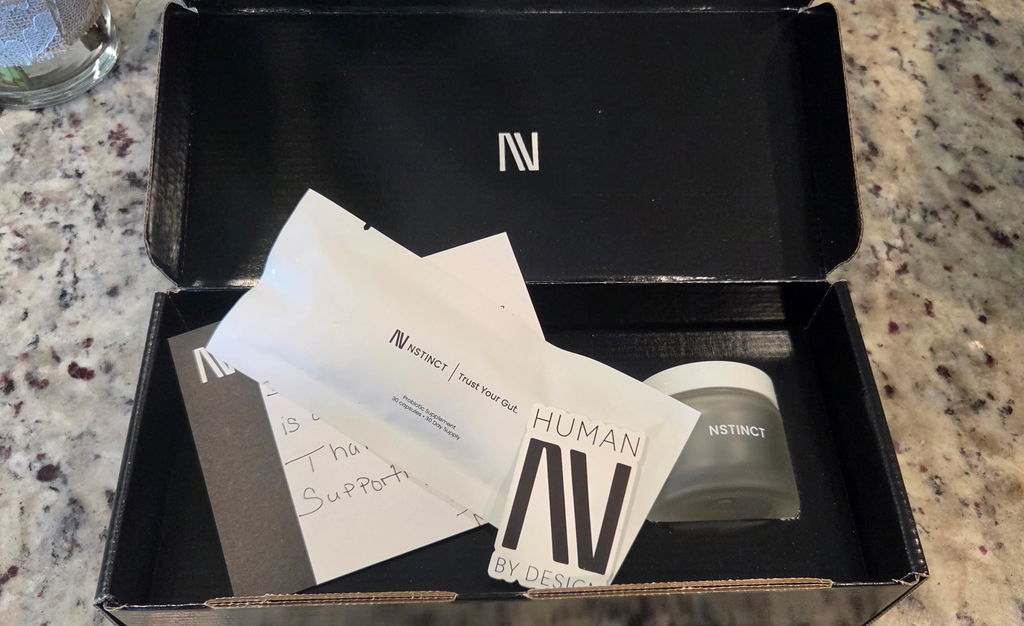
Your Gut Guide: Simple Steps to Get the Most From Every Capsule
Taking a Broad Spectrum Probiotic is a great place to start. But what else can you do to feel your best and truly set your gut up for success?
We consider a probiotic as daily support, but it works best on solid ground. Your digestion, how regularly things move, and how you feel day to day all come down to a handful of simple habits. None of them are complicated. The key is doing them consistently.
As you read, look for one simple change you can make. Start there, then build your routine over time. A healthy gut can show up in so many areas of your life, but it can also be thrown off just as easily. Small, steady habits are what keep it on track.
Here's your game plan.
Step 1: How to Take NSTINCT Broad Spectrum Probiotic
- One a day. Take one capsule with a glass of water.
- Same time daily. Your gut loves a routine. I personally take it each morning when I sit down to work, our CEO takes it each night with her night time routine.
- Habit Stack. Stack it with something you already do every day, like your morning coffee, before or after you brush your teeth, or anything that you routinely do each day so you never forget.
Consistency is the whole game. Most probiotic bacteria don't move in for good. They do their work while they pass through, so taking NSTINCT every day matters more than any single dose. The same goes for everything else in the capsule. Prebiotics keep your good bacteria fed, and postbiotics support a healthy gut environment, but like probiotics, they work best when you take them every day. Give your gut a few weeks to settle in.
What to expect the first couple of weeks. Some people notice something is going on at first as their gut adjusts. That's common and usually settles down within the first week. You are reintroducing some bacteria that may have been missing for years! If it doesn't settle down, or anything feels off, check in with your doctor.
Step 2: Feed Your Good Bacteria (Fiber)
Fiber is the fuel for your good bacteria, and it's the single biggest thing you can do for your gut. Guidelines call for about 25 grams a day for women and 38 for men, but the average American gets around 16 (Quagliani & Felt-Gunderson, 2017). My time coaching, most clients started off eating less than 8 grams a day.
- Add one more plant to every meal. A handful of spinach, a side of beans, berries with breakfast, half of an avocado.
- Mix it up. Different plants feed different bacteria. Variety beats perfection.
- Go slow. Add a few grams a week instead of doubling overnight. Your gut needs time to adjust, and jumping too fast can leave you bloated.
Want the full breakdown on which fibers feed your good bacteria? Read our Prebiotics vs. Probiotics post.
Step 3: The One-Ferment Challenge
Fermented foods naturally contain live cultures that add even more variety to your gut. In a Stanford study, adults who ate more fermented foods for 10 weeks saw their gut bacteria become more diverse and several markers of inflammation go down (Wastyk et al., 2021). Try one this week:
- Yogurt or kefir with "live and active cultures" on the label
- Sauerkraut or kimchi from the refrigerated section
- Miso
Pick one and make it part of your routine.
A few tips to get the most out of them:
- Go plain. Flavored yogurts and kefirs often pack a lot of added sugar. Choose plain and add your own fruit.
- Watch the salt. Sauerkraut, kimchi, and miso can be high in sodium, so a little goes a long way.
- Don't boil your miso. Heat kills the live cultures. Stir it into soup at the end, off the heat.
- Bonus benefits. Yogurt and kefir are often easier on people who struggle with lactose, and they bring protein and calcium too.
Step 4: Hydrate
Fiber and water work as a team. Fiber pulls water into your gut to keep things soft and moving. Add fiber without enough water, and you can end up more backed up, not less.
- Start your day with a glass of water, right alongside your capsule.
- Keep a bottle within reach at your desk or in your car.
- Eat your water too. Fruits, vegetables, and soups all count toward your daily fluids. Most of your daily fluid comes from drinks, but about 20% comes from food (Mayo Clinic).
Step 5: Keep Things Moving
Your gut is a muscle, and movement helps it do its job. Long stretches of sitting slow digestion down.
- Get up every hour. Set a reminder to stand, stretch, or walk to refill your water.
- Walk after meals. Even 5 minutes helps.
- Aim for about 150 minutes of movement a week, the general guideline for adults (CDC). That's just over 20 minutes a day.
NSTINCT has your back here too. Our blend includes Bifidobacterium lactis HN019, a strain studied for digestive regularity. In a clinical trial of adults with mild digestive symptoms, HN019 helped food move through the gut faster, with fewer digestive complaints (Waller et al., 2011).
Step 6: Build a Bathroom Routine
Nobody talks about this one, but don't sleep on it. Life gets busy, and what gets prioritized gets done. Your bathroom routine rarely makes that list, and putting it off is how a little discomfort turns into a lot more later. Here's how to make it easy:
- Use your morning window. Eating a meal naturally signals your colon to get moving. That's why many people go after breakfast. Give yourself a few unhurried minutes then.
- Don't ignore the urge. Holding it regularly can make things harder to move later.
- Try a footstool. Raising your knees puts your body in a more natural position.
Step 7: Rest and Reset
Your gut and your brain are in constant conversation, so sleep and stress show up in your digestion. It's no coincidence that when you're stressed, you feel it in your gut. Your gut is lined with more than 100 million nerve cells, so many that scientists often call it your "second brain" (Johns Hopkins Medicine).
- Protect your sleep. Adults need at least 7 hours a night (CDC). Try a consistent bedtime, even on weekends.
- Take the edge off stress. Pick one thing: ten minutes off your phone, a walk after dinner, or a few slow breaths before meals.
- Slow down at meals. Eating fast and on the go means more swallowed air and less chewing. Sitting down and chewing well gives your digestion a head start.
Step 8: Mind the Disruptors
You don't have to be perfect. Just be aware of what works against you:
- Added sugar and ultra-processed foods. Aim for 5% Daily Value or less of added sugar on labels.
- Alcohol. Heavy drinking is linked to a less healthy mix of gut bacteria.
- Antibiotics. Take them when you need them, and only then. If you're on antibiotics, ask your doctor or pharmacist about timing your probiotic around them.
A Note for GLP-1 Users
If you take a GLP-1 medication, you may be eating less overall, which can also mean less fiber and less fluid. These basics matter even more for you: steady fiber, plenty of water, and daily movement. Talk with your prescriber about any digestive changes.
Track How You Feel
Give it a few weeks and pay attention to the simple stuff: How regular are you? How's your energy? How do you feel after meals? Small, steady changes are the goal.
When to Talk to Your Doctor
This guide is about everyday habits for a healthy gut. It isn't medical advice, and no supplement replaces a checkup. As a general rule for anyone, some digestive symptoms are always worth a visit to your doctor: blood in your stool, unexplained weight loss, ongoing stomach pain, or changes in your bowel habits that last more than a few weeks.
Your Daily Checklist
- Take one NSTINCT capsule with water, same time every day
- Add one more plant to each meal
- Eat one fermented food
- Keep water within reach all day
- Get up and move every hour
- Aim for 7+ hours of sleep
And remember: progress, not perfection. Modern life is hard on your gut, and checking off every box every day isn't realistic. That's okay. Just being mindful is a great place to start.
Your gut was designed to work in balance. Give it a solid foundation, and let NSTINCT be your daily backup.
Not taking NSTINCT yet? Shop the Broad Spectrum Probiotic.
References
- Quagliani D, Felt-Gunderson P. Closing America's fiber intake gap: communication strategies from a Food and Fiber Summit. American Journal of Lifestyle Medicine. 2017;11(1):80-85. PMC
- Wastyk HC, Fragiadakis GK, Perelman D, et al. Gut-microbiota-targeted diets modulate human immune status. Cell. 2021;184(16):4137-4153. DOI
- Mayo Clinic. Water: How much should you drink every day? mayoclinic.org
- Centers for Disease Control and Prevention. Adult Activity: An Overview. cdc.gov
- Waller PA, Gopal PK, Leyer GJ, et al. Dose-response effect of Bifidobacterium lactis HN019 on whole gut transit time and functional gastrointestinal symptoms in adults. Scandinavian Journal of Gastroenterology. 2011;46(9):1057-1064. PMC
- Johns Hopkins Medicine. The Brain-Gut Connection. hopkinsmedicine.org
- Centers for Disease Control and Prevention. About Sleep. cdc.gov
*These statements have not been evaluated by the Food and Drug Administration. This product is not intended to diagnose, treat, cure, or prevent any disease. This article is for informational purposes only and is not medical advice. Talk to your doctor before starting any supplement, especially if you are pregnant, nursing, immunocompromised, or taking medication.